
Before running any queries, I used the show tables and desc commands to check the contents of the database and the format the data was held in, which affects how the data can be meaningfully displayed and manipulated. In the titles table, for example, the subject field was poorly populated and the notes field poorly described as it appeared to contain Dewey Decimal classmarks.
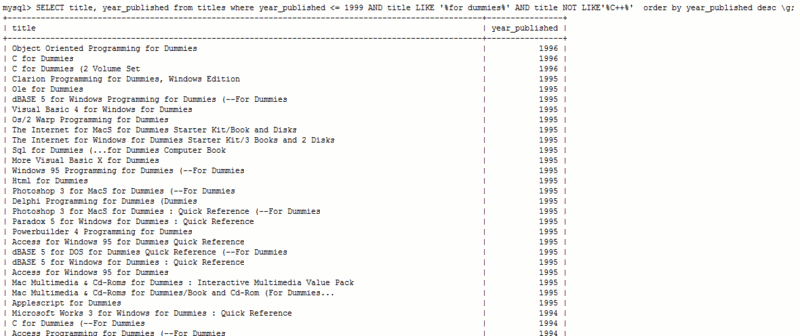
I ran a simple query to find all books in the '...for Dummies' series, ordered by year published, displaying data in a grid format. This list had 48 items, but was not very specific. For instance, the librarian for Computing may tell me she only wants to discard books over ten years old, and does not want to weed any books on C++. The following query was entered, yielding 44 results (click to enlarge):
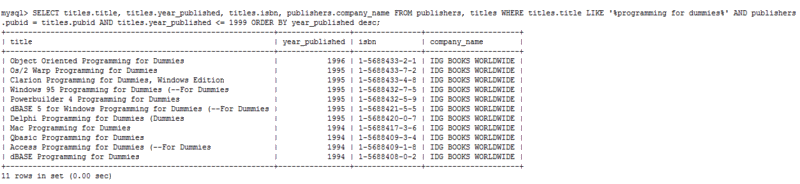
Though a hypothetical example, I undertake similar collection management tasks at work using the Millennium library management system, which uses Boolean logic to search patron, item and bibliographic records. I have learned vital transferable skills as I know how to extract data precisely and adeptly, as opposed to running vague queries and sifting through print-outs due to employing inefficient search techniques.


No comments:
Post a Comment